
Why are my aircon pipes dripping water?
Aircon pipes drip when condensation forms on cold refrigerant pipes or the drain pipe because their insulation is compressed, torn or missing. Humid air reaches the cold surface, drops below its dew point and turns to water. The fix is replacing the insulation and giving the pipes enough room, which for concealed pipes means opening and patching the ceiling.
Key takeaways
- Condensation is not a drain leak: the water forms on the outside of cold pipes, so it can drip far from the unit.
- Squashed insulation stops working: in tight concealed trunking, compressed insulation lets the cold reach the surface.
- Damage spreads quietly: watermarks, soft plaster and a rusted mounting bracket are the usual signs.
- Sweating louvres are an airflow issue: a dirty evaporator coil or blower fan makes the air leaving the unit too cold.
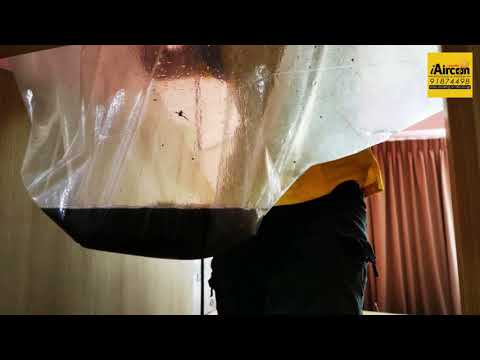
In the video above, Uncle Eric and the team repair severe condensation on a Mitsubishi Electric Starmex inverter aircon, from removing the unit to replacing the pipe insulation and patching the plaster.
How do I know it is condensation and not a leak?
- Find where the water appears. If it drips from the bottom of the indoor unit, it is more likely a drain problem: see why an aircon leaks water. If it drips from trunking, pipes, a box-up or the false ceiling, go to step 2.
- Check the exposed pipes. Wet, flattened or split insulation, or bare sections at bends and wall openings, confirm condensation.
- Watch the timing. Condensation drips start after the aircon has run for a while and slow down once it is off. If water appears with the aircon off, look for a plumbing leak instead.
- Look at the louvres. Droplets on the front of the unit or the louvres, with doors and windows closed, point to low airflow from a dirty evaporator coil or blower fan.
- Check for ice. Frost on the pipes or coil means the evaporator is freezing. With clean filters, that points to low refrigerant, which means a leak: see signs of an aircon gas leak.
If steps 2 or 3 point to condensation inside a ceiling or wall, it needs opening up. Dripping right now? Message Luna on WhatsApp.
What causes aircon condensation?
The refrigerant pipe carrying gas back from the indoor unit runs cold, and so does the drain pipe carrying condensate from the evaporator coil. Singapore air is warm and humid all year. When it touches a surface colder than its dew point, the moisture condenses, just like on a cold glass.
Insulation on the refrigerant pipes stops this by keeping warm air away from the cold pipe. Condensation starts when the insulation is:
- Compressed, so it loses the air gap that makes it work.
- Torn or missing, often at bends, joints and wall openings.
- Never fitted, for example an uninsulated PVC drain pipe.
- Waterlogged, so it carries the cold straight through.
Why is condensation so common with concealed piping?
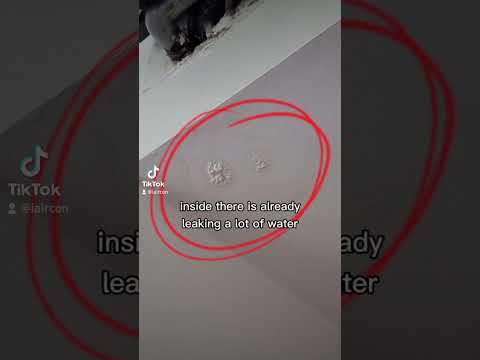
In many condos the drain pipes and refrigerant pipes are concealed in false ceilings, trunking or box-ups. In a standard installation the drain pipe often shares the same tight space as the gas pipes. There is not enough room for proper insulation, so it gets squeezed flat and does not last. Over time droplets soak into the ceiling: first watermarks and bubbling paint, then plaster or drywall that softens and comes apart.
Case study: severe condensation on a Mitsubishi Electric Starmex
This customer's ceiling had heavy watermarks and the drywall was coming apart under the unit. Here is what we did:
- Removed the indoor unit for full access to the pipes and drain pipe behind it.
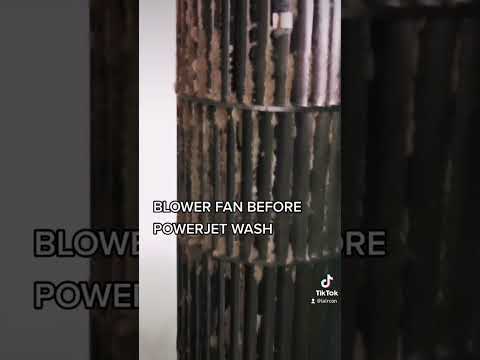
- Chemical overhaul with PowerJet. It was a high-BTU model with a double-layer coil, and we could see wipe marks where a previous servicer had just used a cloth. Normal tap pressure cannot flush chemical residue out of a double coil, which is why some people say chemical cleaning damages aircons. We used PowerJet on every fin and every blower fan blade, then checked the coil close up. More in our chemical overhaul service.
- Replaced the refrigerant pipe insulation with brand new insulation.
- Rerouted the drain pipe to the left side of the unit instead of the right, so it no longer shared the cramped space, and insulated it fully.
- Replaced the mounting bracket, which months of dripping had rusted. The bracket carries the whole weight of the aircon, so it has to be secured properly.
- Patched the opening with plaster, ready to paint after about 24 hours.
- Cleared the floor trap the drain empties into, so nothing was clogged downstream.
A related fix: uninsulated drain pipe in a box-up
Our bad-condensation series shows another common setup. A bare PVC drain pipe ran through the box-up, so all the cold condensate passed through an uninsulated pipe and droplets formed along it. We removed that PVC section and connected the drain directly into the internal pipes. That freed space for the gas pipe, so its insulation was no longer compressed and stopped dripping. Watch: bad condensation repair, part 1.
Why is the aircon casing or louvre sweating?
Droplets on the front of the indoor unit or the louvres are usually an airflow problem rather than an insulation one:
- A dirty evaporator coil or blower fan reduces airflow, so the air leaving the unit is colder than it should be and chills the plastic.
- Humid air reaches the unit, for example with doors or windows left open.
- Low refrigerant can freeze the evaporator, and the cold spreads to the casing.
What it costs
Job | Price | What drives it |
|---|---|---|
Pipe insulation replacement, exposed pipes | Quoted after the S$150 diagnosis | Length of pipe |
Concealed pipe insulation, incl. opening and patching | Quoted after the S$150 diagnosis | Ceiling or box-up access, length of run |
Drain pipe rerouting | Quoted after the S$150 diagnosis | Route and wall or ceiling work |
Mounting bracket replacement | Quoted after the S$150 diagnosis | Unit size and weight |
Chemical overhaul (last resort, for an extremely soiled unit) | S$180 | Unit type and BTU |
When to call a technician
Call a technician once you see watermarks, soft plaster or rust, or if the drips come from inside a ceiling or wall. Hidden pipes cannot be fixed from outside, and the longer they drip, the more ceiling has to be repaired. Our aircon repair team handles the insulation, drain rerouting and patching in one job.
You can book online in under a minute, or chat with Luna, our AI assistant, on WhatsApp any time.
Frequently asked questions
Is condensation the same as an aircon water leak?
Not quite. A water leak usually means the water collected inside the unit is not draining away. Condensation means water is forming on the outside of cold pipes or surfaces, so it can drip far from the unit, often inside trunking or a false ceiling.
Can I just wrap the pipes with more insulation tape?
Tape over damaged insulation rarely lasts, and it does not help pipes hidden in a ceiling or wall. If the insulation is squashed or wet, it needs to be replaced and the pipes given enough room so the new insulation is not compressed again.
Will the watermarks on my ceiling go away after the repair?
The marks stay, but once the dripping has stopped and the area has dried, the plaster can be patched and repainted. On the job in the video, the patched plaster was ready for painting after about 24 hours.
Is it safe to keep using the aircon until it is repaired?
Short use is unlikely to be dangerous, but every hour of cooling adds water to the ceiling or wall. If you can, use it less until the repair, and keep water away from light fittings and power points under the drip.
Will the condensation come back after the repair?
Not if the insulation is replaced properly and the pipes have enough room. It tends to come back when new insulation is squeezed into the same cramped space, which is why rerouting the drain pipe is sometimes part of the fix.

Eric Lim, aka Uncle EricFounder of iAircon.Repair, now in its 10th year servicing aircons in Singapore. Every job is filmed, so you can watch the work on YouTube.