
What does a chemical wash do for a Panasonic inverter aircon?
A chemical wash cleans an inverter aircon on the wall. Coil chemical goes onto the evaporator coil to lift dirt and grime, then a PowerJet deep clean flushes it out, while the blower fan and drain pan are removed and washed. It restores airflow and clears musty smells, but it does not check the gas.
Key takeaways
- On the wall, not dismantled: the coil is cleaned in place; the blower fan and drain pan come out.
- Coil chemical plus PowerJet: the chemical loosens grime and the high-pressure jet washes it out.
- About 10 to 15 minutes per unit: at S$120 per unit.
- Not a gas fix: if the gas is low, a wash will not bring the cold back.
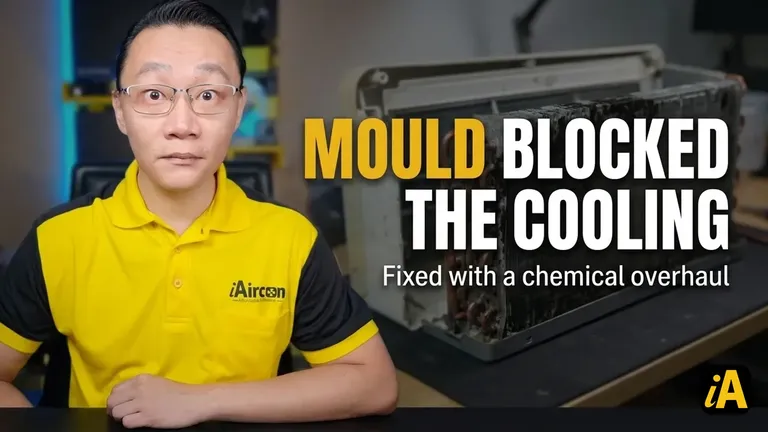
The video above is an older job of ours on a Panasonic inverter wall unit. You can see the blower fan before cleaning, visibly dirty, the unit opened on the wall with a wash bag fitted, and the clean unit afterwards. Today we also take the blower fan and drain pan out for a PowerJet wash.
Is a chemical wash enough, or do you need an overhaul?
- Look through the air outlet with a torch. Grey dust or dark spots on the blower fan blades mean it is time for a deep clean.
- Notice the smell. A musty smell when the aircon starts is mould on the fan and coil. A chemical wash usually clears it; our guide to why an aircon smells covers other causes.
- Check for water leaks. If water drips from the indoor unit, a clogged drain pan is often to blame, and the wash cleans it.
- Think about the last wash. If a chemical wash did not fix it, or the problem came back within weeks, the build-up is deeper than a wash can reach, and a chemical overhaul is the next step.
- Rule out gas. If the unit is clean but still not cold, the cause may be low gas, which a wash will not fix.
If steps 1 to 3 describe your unit, book a chemical wash.
What the video shows on this Panasonic
The front panel is lifted. Behind the louvres, the blower fan is grey with grime, and the coil behind it has the same dull coating. With the electronics covered, a plastic wash bag is fitted under the unit so the dirty water runs into it instead of down the wall. After the wash, the fan blades and coil fins are clean again, and the unit goes back together on the wall. Nothing about this model needed special handling: the same steps apply to any wall-mounted split unit.
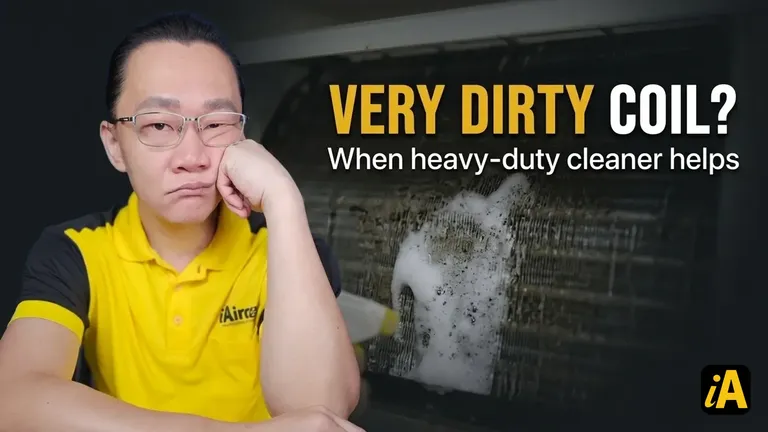
The full list of what our wash covers is on the chemical wash service page. For a very dirty coil, we may advise our heavy-duty coil cleaner as an add-on, from S$30, and we tell you on site before using it. Our post on chemical wash vs chemical overhaul compares all three levels of cleaning side by side.
Why inverter units get so dirty
Inverter aircons run for long hours at low speed, which keeps the coil cold and wet for most of the night. In Singapore's humidity, dust that slips past the filter sticks to that wet coil, and mould grows on the blower fan and in the drain pan. The unit still runs, but airflow drops, the room takes longer to cool, and the smell builds up. A Panasonic is no different from other brands here: the cleaning need comes from how the unit is used, not the badge.
What it costs
Job | Price | What drives it |
|---|---|---|
Chemical wash | S$120 per unit | No multi-unit rate |
Heavy-duty coil cleaner add-on | From S$30 | Only for a very dirty coil, advised on site |
Chemical overhaul (if a wash is not enough) | S$180 per wall unit | Unit fully dismantled; includes a gas check and top-up |
Every service includes a 90-day warranty. To keep the unit clean between washes, book regular premium servicing with PowerJet.
What to expect on the day
We cover the wall and the floor under the unit, protect the electronics and fit a wash bag to catch the water. The blower fan and drain pan come out and are washed separately, usually in the bathroom, while the coil is cleaned on the wall. Everything goes back in, the unit is tested, and we clean up before we leave.
When to call a technician
Book a wash if your Panasonic smells musty on start-up, shows dark spots on the blower fan, drips water, or cools more slowly than it used to. Book online in under a minute, or ask Luna, our AI assistant, on WhatsApp at any hour.
Frequently asked questions
Is a chemical wash safe for a Panasonic inverter aircon?
Yes. The electronics are covered and a wash bag catches the water. The chemical goes on the coil and is flushed out with the PowerJet, so the inverter board is never washed.
How long does a chemical wash take per unit?
About 10 to 15 minutes per unit, with the unit staying on the wall. Setting up and clearing up at the start and end of the visit take a little extra time.
Will a chemical wash fix a Panasonic that is not cold?
Only if dirt is the cause. A wash restores airflow through a clogged coil and blower fan, but it does not check the gas. If the unit is clean and still not cold, book a gas check (S$165) instead.
Does the warranty cover the wash?
Yes. Every service, including a chemical wash, carries a 90-day warranty: if the unit leaks water or stops cooling within 90 days, we come back free, unless the cause is a gas leak it already had.
How often does a Panasonic inverter need a chemical wash?
There is no fixed interval. It depends on hours of use, dust and how regularly it is serviced. Regular premium servicing keeps the blower fan and coil clean, so a chemical wash is needed less often.

Eric Lim, aka Uncle EricFounder of iAircon.Repair, now in its 10th year servicing aircons in Singapore. Some of our jobs are filmed, and you can watch the work on YouTube.